
Jordan’s Principle & Inuit Child First
First Light is now supporting First Nations and Inuit children under 19 and their families in applying to Jordan’s Principle and the Inuit Child First initiative for support in the following sectors:
- Medical Supplies Equipment: Wheelchair ramps, Mobility aids, Personal Protective Equipment
- Social / Cultural Services & Items: Language or on-the-land programming, Cultural services from Elders, Country food programs, Specialized summer camps, Cultural toys & resources
- Educational Resources & Products: Tutoring services, Educational assistants, Specialized school transportation, Psycho-educational assessments, Assistive technologies for home & classroom, School supplies
- Child Development Supports: Assessments / Screenings, Language and Literacy skills development
- Mental Health Supports: Therapeutic services like Speech therapy, Physiotherapy, and Occupational Therapy
- Other Supports for Substantive Equality: Various supports ensuring fairness and access to necessary services
Jordan’s Principle
Jordan’s Principle is a human rights principle largely defined by the Canadian Human Rights Tribunal (CHRT) to make sure that First Nations children do not face gaps or delays in accessing government services and are not denied government services because of their identity as First Nations children.
Jordan’s Principle is named in memory of Jordan River Anderson. He was a young boy from Norway House Cree Nation in Manitoba.
Inuit Child First
The Inuit Child First Initiative ensures Inuit children have equal access to essential government funded health, social and educational products, services and supports.
Our Navigator
✅ Providing support in navigating the application process.
✅ Assisting families in understanding their eligibility and available services.
✅ Advocating for timely access to necessary supports for children.
First Nations Child and Family Services and Jordan’s Principle Settlement
The first Claims Period for the First Nations Child and Family Services and Jordan’s Principle Settlement opened on March 10, 2025.
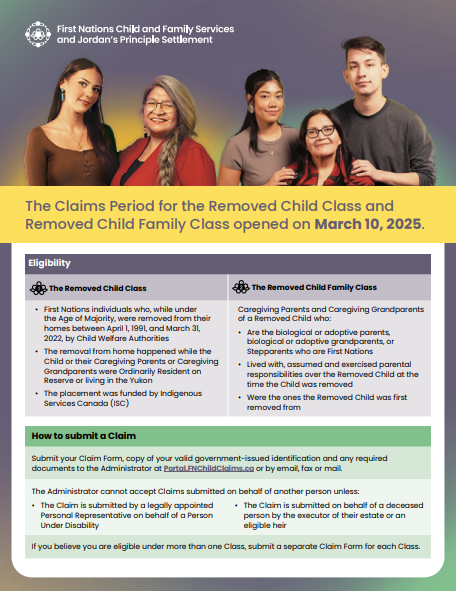
Class Members of the Removed Child Class and the Removed Child Family Class can now submit a claim for compensation.
- Removed Child Class: First Nations individuals who, while under the Age of Majority, were removed from their homes between April 1, 1991, and March 31, 2022, by Child Welfare Authorities. The removal from home happened while the Child or at least one of their Caregiving Parents or Caregiving Grandparents were Ordinarily Resident on Reserve or living in the Yukon. The placement was funded by Indigenous Services Canada.
- Removed Child Family Class: Eligible Caregiving Parents or Caregiving Grandparents of a Removed Child who were living with and assumed parental responsibilities over the Child at the time of removal and were the ones from whom the Child was first removed.
How to submit your Claim
If you are an adult (“Age of Majority”), or within two years of becoming an adult in your province or territory, you can submit your Claim now. Click the button below for the short booklet with details on what you need.
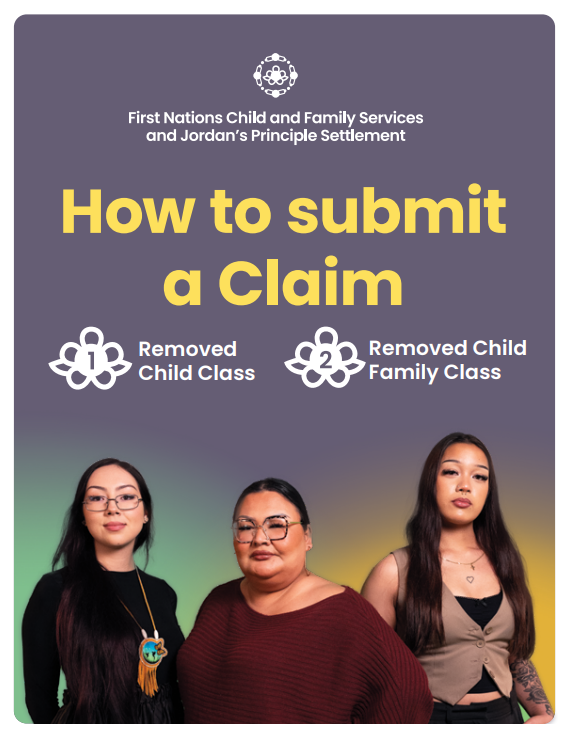
- Claims can be submitted through the Claims Portal (Portal.FNChildClaims.ca) or by email, fax or mail.
- You’ll need a copy (photocopy, scan or photo) of valid government-issued ID.
- You need to have a current mailing address.
- You need to provide a bank account in your name only if you want your compensation money deposited directly into a bank account.
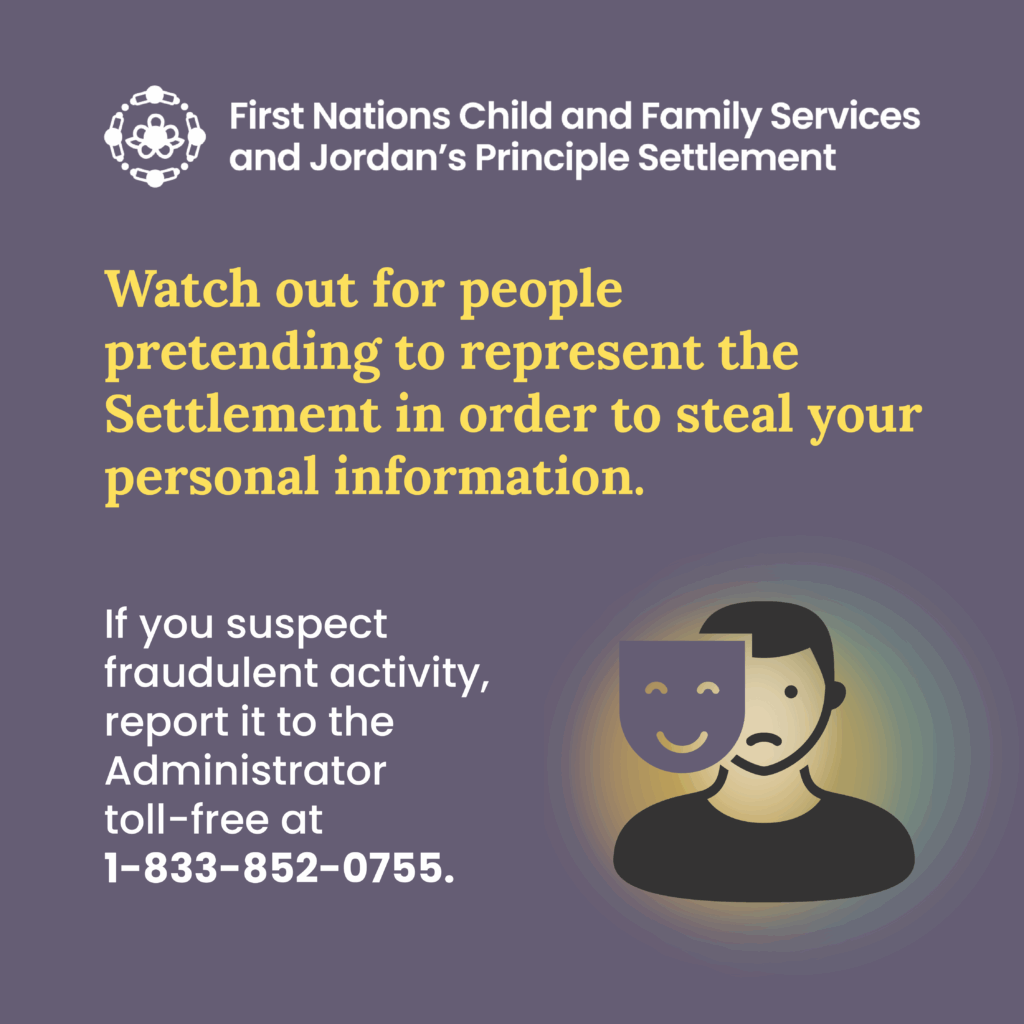
BEWARE OF FRAUD!
You do not have to pay anyone to help you submit your Claim or to receive payment under this Settlement.
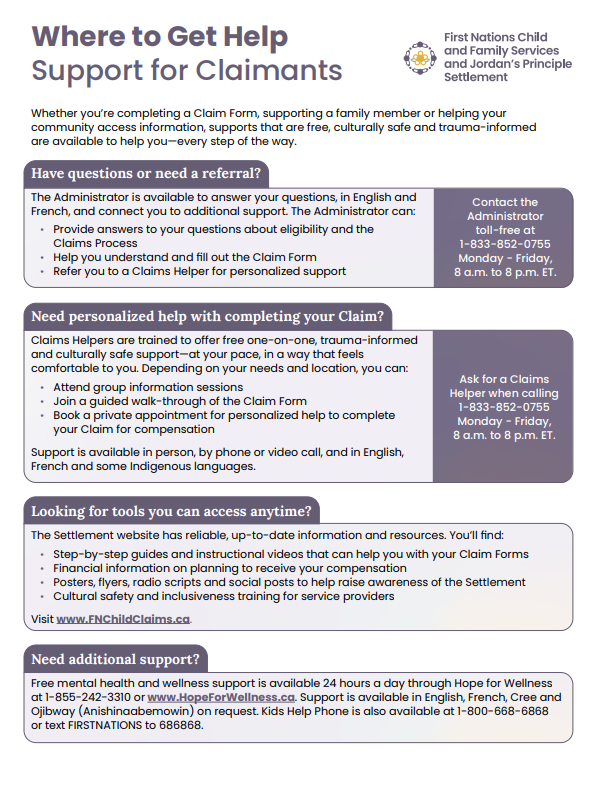
Need Support?
Whether you’re completing a Claim Form, supporting a family member or helping your community access information, supports that are free, culturally safe and trauma-informed are available to help you.
Remember, feel free to contact Our Navigator for local support along the way as you navigate these systems.
The Settlement website has reliable, up-to-date information and resources. You’ll find:
- Step-by-step guides and instructional videos that can help you with your Claim Forms
- Financial information on planning to receive your compensation
- Posters, flyers, radio scripts and social posts to help raise awareness of the Settlement
- Cultural safety and inclusiveness training for service providers